Cacio e Pepe
Four things: spaghetti, pecorino, pepper, and the water you were about to pour down the sink. There is nowhere to hide in this recipe. This is precisely why you should learn it properly.
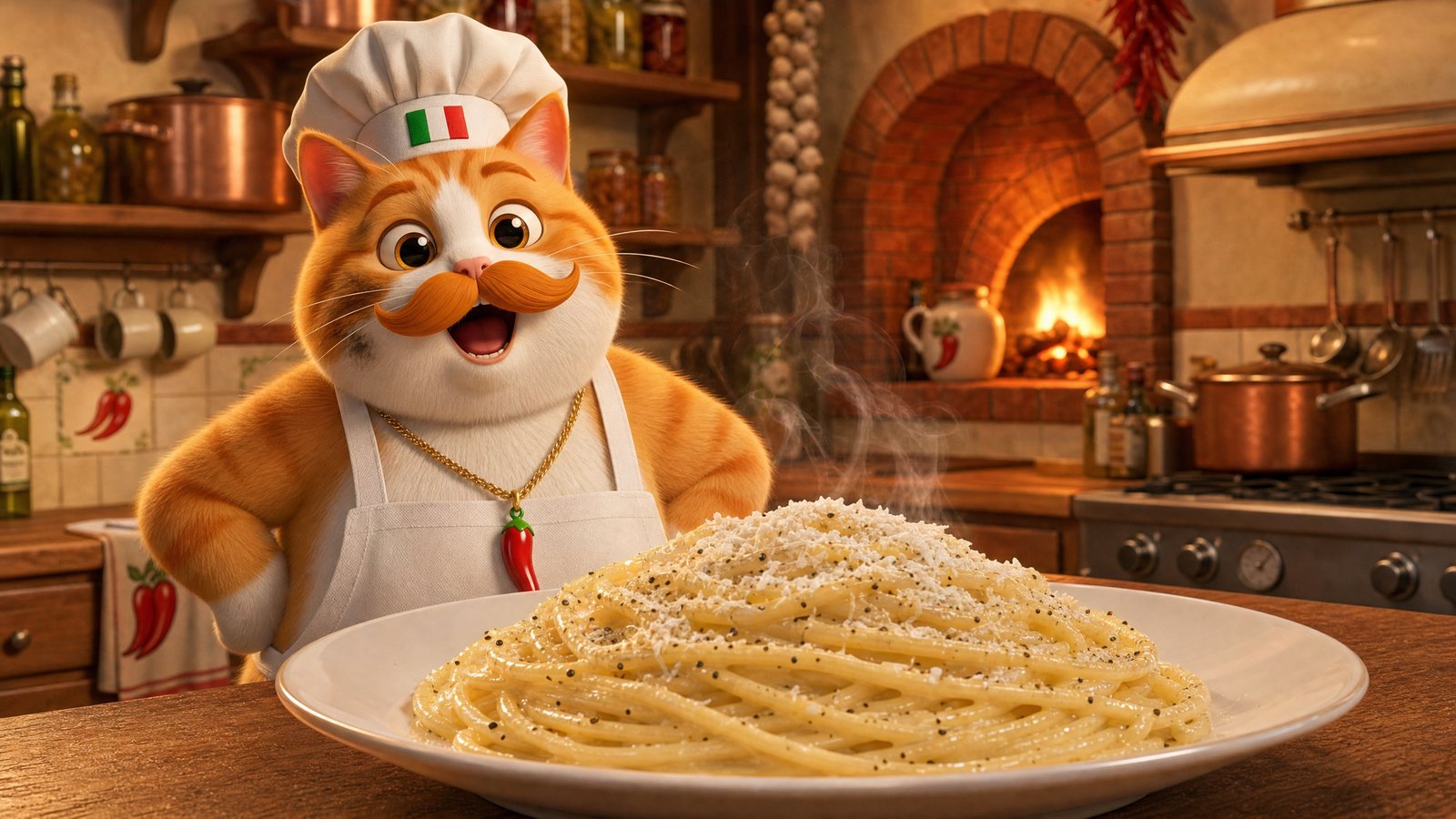
My friends. Everybody tells you this dish is simple, and everybody is correct, and this is the trap. There is no cream in it. No butter. No flour. The sauce is nothing but cheese and cloudy water, persuaded — persuaded, not forced — into becoming one thing. When it works it is glossy and holds onto every strand. When it fails, the pecorino turns into little stones and sits at the bottom of the bowl looking at you.
And almost every failure is the same two failures: heat and starch. Fix those and the rest is nothing.
“People see three ingredients and they relax. They think: ‘Ah, easy.’ No. With three ingredients there is nowhere to hide. If you are lazy, the pasta knows. If you are arrogant, the cheese knows. If your water is weak, everybody knows. Pasta is honest. That is the problem.”
— Episode One
Ingredients
- 200 g spaghetti — or tonnarelli, if you can find it
- 100 g Pecorino Romano DOP, grated as finely as you can manage
- 1 tbsp whole black peppercorns (about 6 g)
- Salt for the pasta water, in moderation
- The starchy pasta water — an ingredient, not a leftover
Real Pecorino Romano DOP, and grate it yourself, as finely as you can manage. The pre-grated cheese in the bag is treated so that it does not clump in the bag — which is, I want you to appreciate this, the exact opposite of what you need it to do in the bowl.
Method
-
Use less water than usual
Not because we are cheap. Because we are strategic. Enough water to cover the pasta and not much more — less water means the starch is concentrated, and the starch is what the sauce will hold onto. And salt it moderately: the pecorino is already extremely salty and it is about to arrive in force.
New to this? → The water from the pasta — what the starch is actually doing, and why the big pot everybody recommends is working against you.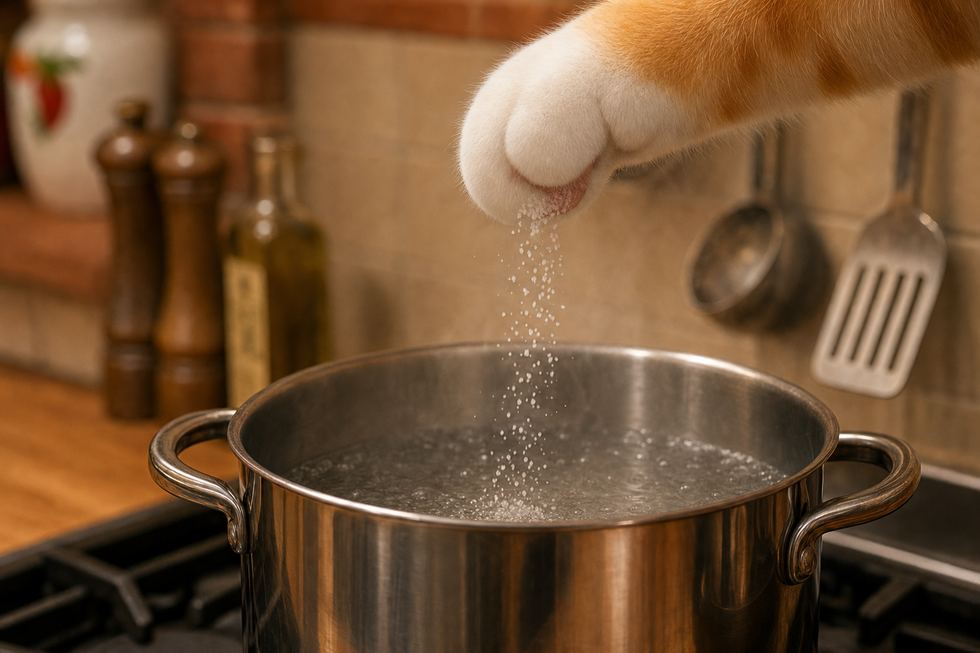
Enough water to cover the pasta and not much more — and salt it moderately, because the pecorino is bringing its own. -
Cook the pasta short — and keep the water
Out of the pot two or three minutes before the packet says. It must still be too hard to serve. This is not a mistake, it is the plan: it finishes cooking in the pan, where the flavour is, absorbing instead of merely visiting. And before you drain — before! — keep a full mug of that cloudy water.
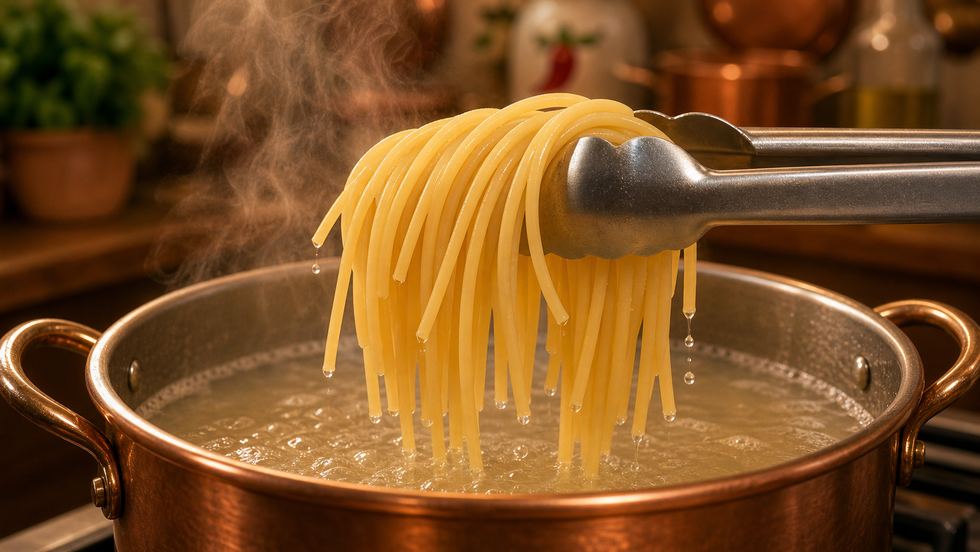
Out two or three minutes before the packet says. It should still be too firm to serve. -
Crush and toast the pepper
Crush the peppercorns coarsely — unevenly is good, keep some pieces bigger than others. Then a dry wide pan, low heat, under a minute, until the smell arrives. Do not let it smoke. Then a small splash of hot pasta water to stop the toasting, and you have a shallow aromatic base in the pan.
“Low heat. Gentle heat. We wake up the aroma, we don't burn the soul.”
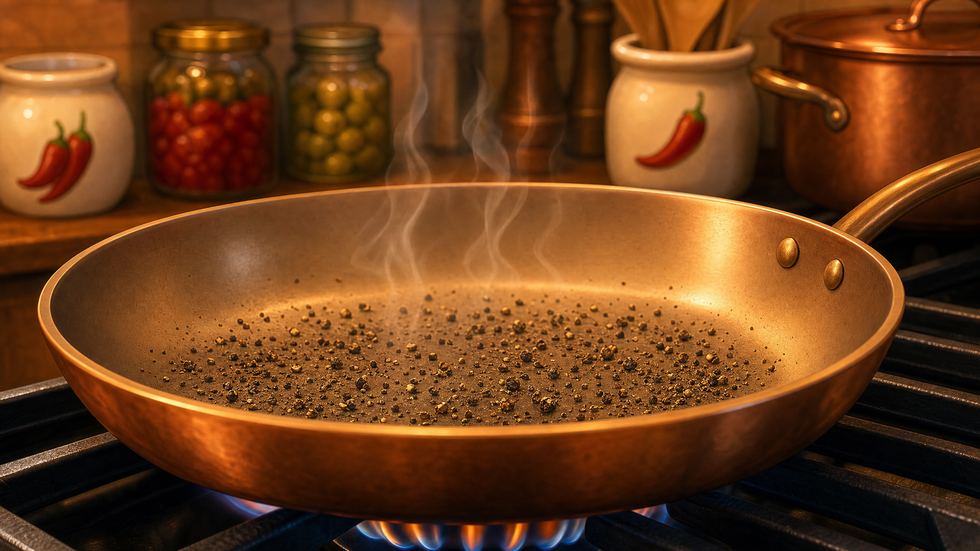
A dry pan, low heat, under a minute — until the smell arrives. Crush them unevenly: some pieces large, some fine. -
Grate the pecorino very fine
Very fine. I said very fine. It should be light and almost powdery. Most of it goes in a bowl for the cream, and a small handful stays back for the end, because the final touch matters. Always.
“If the pieces are too big, they don't melt, they fight.”
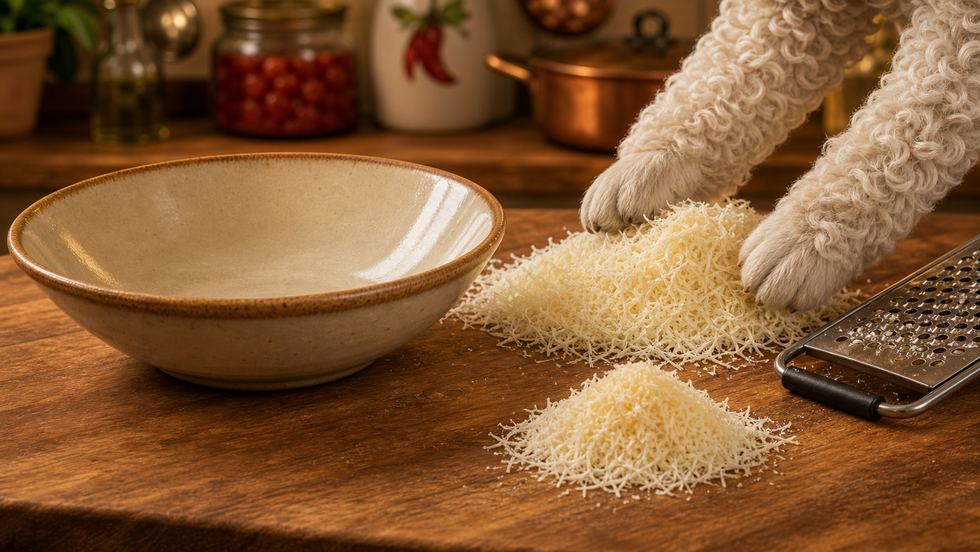
Powdery-fine. Coarse shreds do not melt — they knot. -
Finish the pasta in the pepper pan
Into the pepper pan on low heat with a small splash of the starchy water. Stir, let it reduce until the pan is nearly dry, then another small splash. Again. And again, until the pasta is done. Every round leaves more starch behind and less water, which is exactly what we are building.
“You don't drown the pasta. You drive it to the swimming pool.”
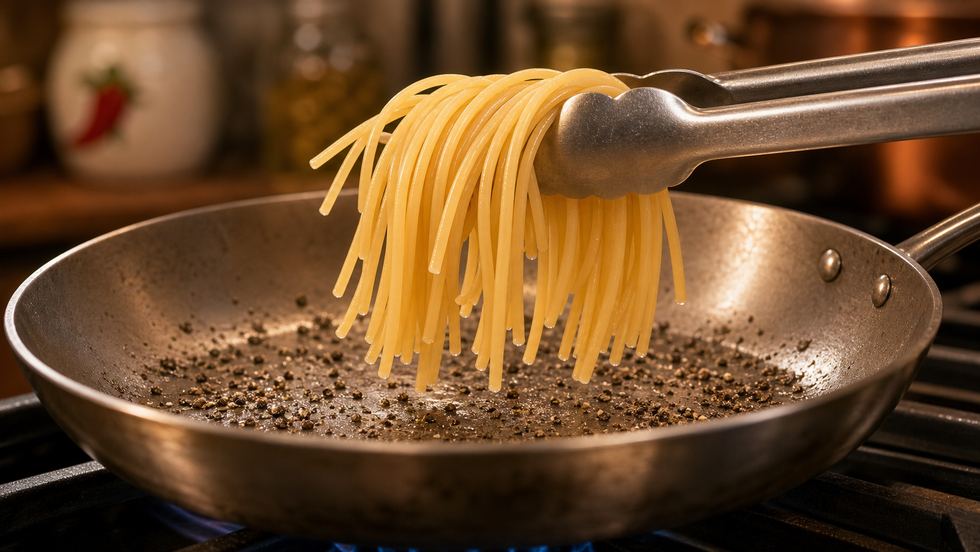
Into the toasted pepper, then the starchy water a splash at a time. -
Make the cream at the last moment
Now. Not ten minutes ago. A little pasta water into the grated pecorino — hot, but not boiling. Ladle it out and let it stand a moment first. This is where most people lose the dish: boiling water cooks the cheese the instant it lands. Then you work it — hard, like you mean it. At first it looks thick and dry and unpromising and you will want to give up. Do not give up. It becomes smooth and dense, closer to a thick custard than a sauce.
“Do not panic when she looks dry. She is not dead. She is thinking.”
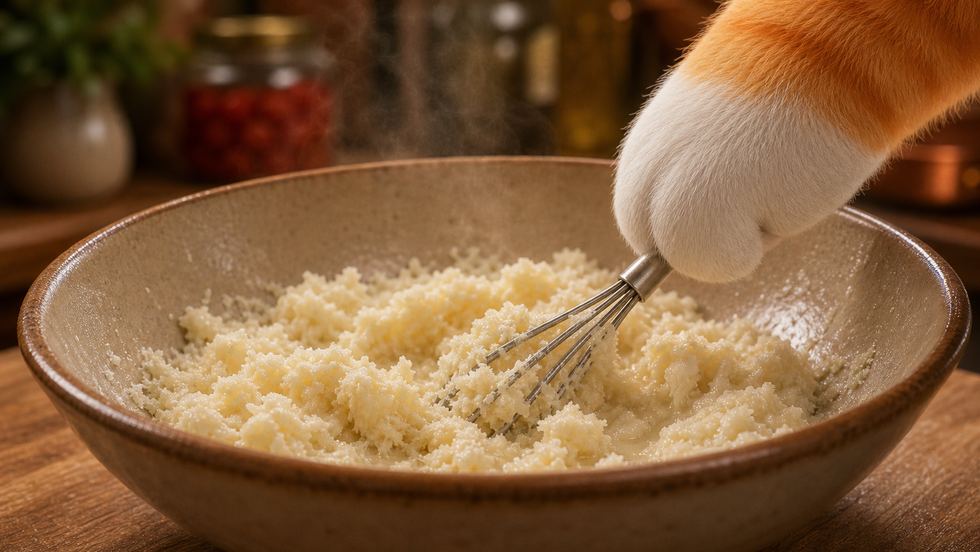
Thick, dry and unpromising at first. Keep working it — it comes smooth. -
Fire off, then combine
The pan comes completely off the heat, and then you wait a few seconds and let it calm down. Only then the cream goes in, and you toss without stopping until every strand turns glossy. This is the whole dish. Above roughly 65 °C the cheese proteins tighten and squeeze their fat out — that is what seizing is, and it is the whole reason for the waiting. Off the heat, they emulsify instead.
This step has a name. → Mantecatura — the last thirty seconds, and why it happens off the heat.“Fire off. Because now we mix everything together, and if the heat is too strong, the pecorino separates, becomes little stones, and then everybody pretends this was the plan. It was not the plan.”
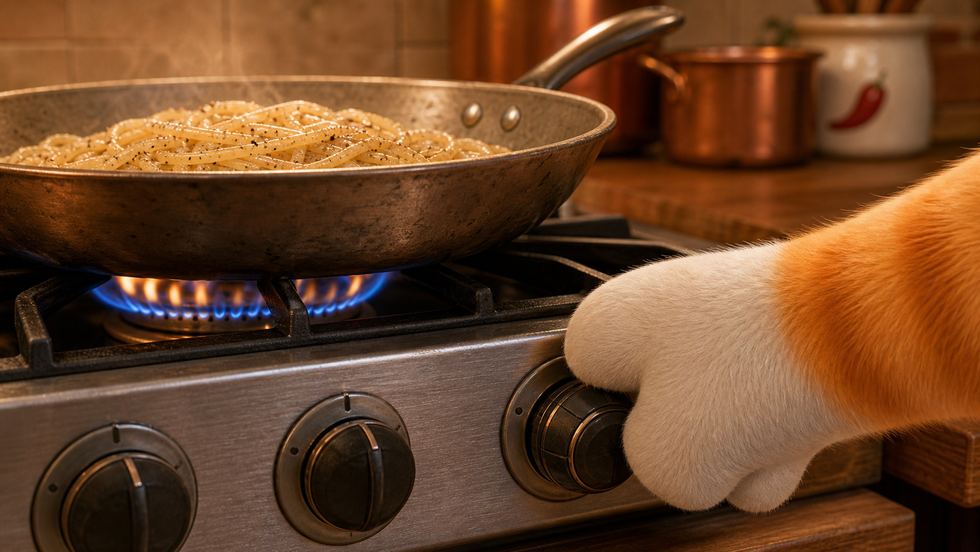
Off the heat completely — then wait a few seconds before the cheese goes anywhere near it. 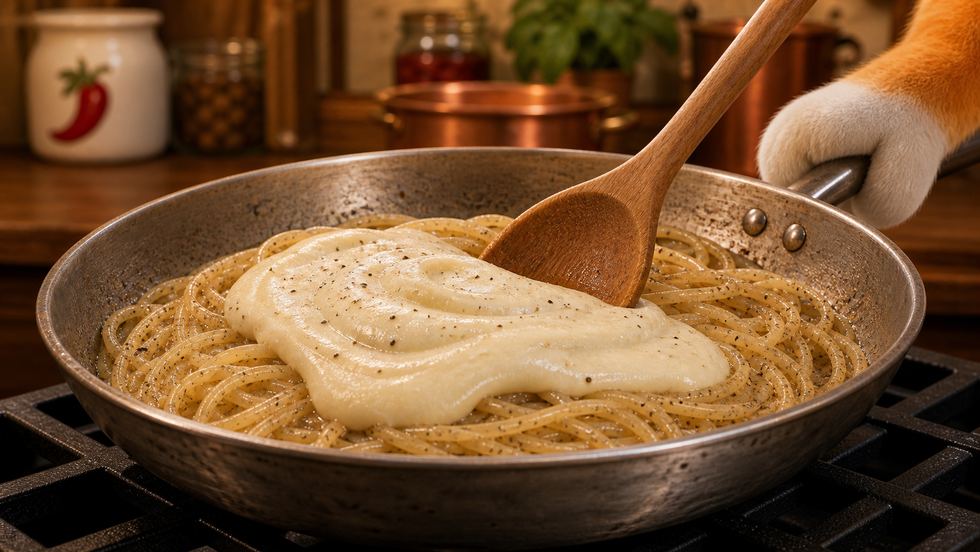
Only now the cream goes in. Toss without stopping until every strand turns glossy. -
Plate, and finish
Twist it onto a warm plate, the reserved pecorino over the top, a little more crushed pepper, and you go immediately. Cacio e pepe waits for nobody — not for you, not for your guests, not for a photograph.
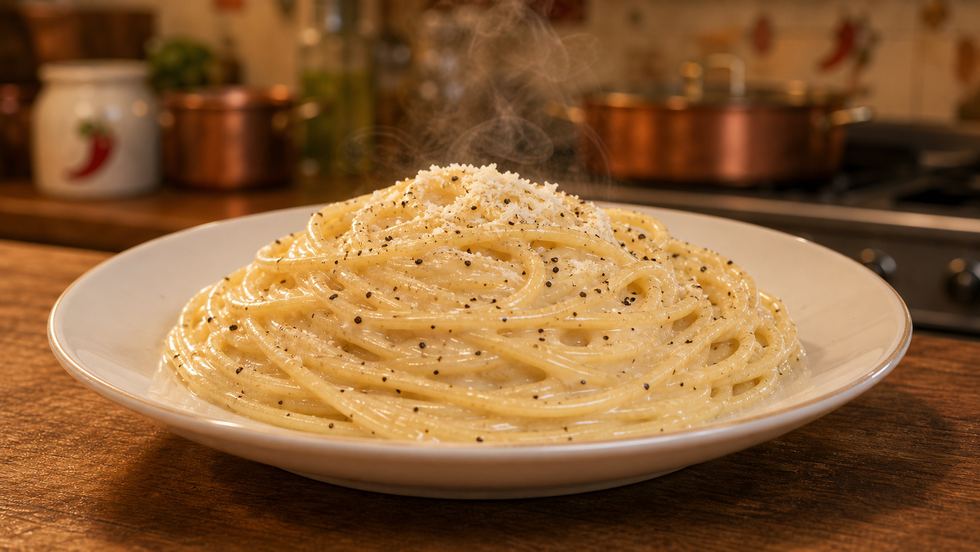
Straight to the table. Cacio e pepe waits for nobody.
When it goes wrong
- The cheese seized into little stones
- The pan was too hot. Off the heat, a splash of warm pasta water, and toss hard — a sauce that has only just split can often be saved. Next time, let the pan cool longer before the cheese goes anywhere near it.
- The sauce is watery and slides off the pasta
- Not enough starch. Too much cooking water, or the pasta was rinsed. Keep reducing the pan; the sauce tightens as the water leaves.
- It went grainy rather than smooth
- The cheese was grated too coarsely, or it came pre-grated out of a bag. Grate it yourself, and grate it fine.
- It's far too salty
- You salted the water as though for a normal sauce. Pecorino Romano brings most of the salt by itself — go light on the water.
Watch the episode